
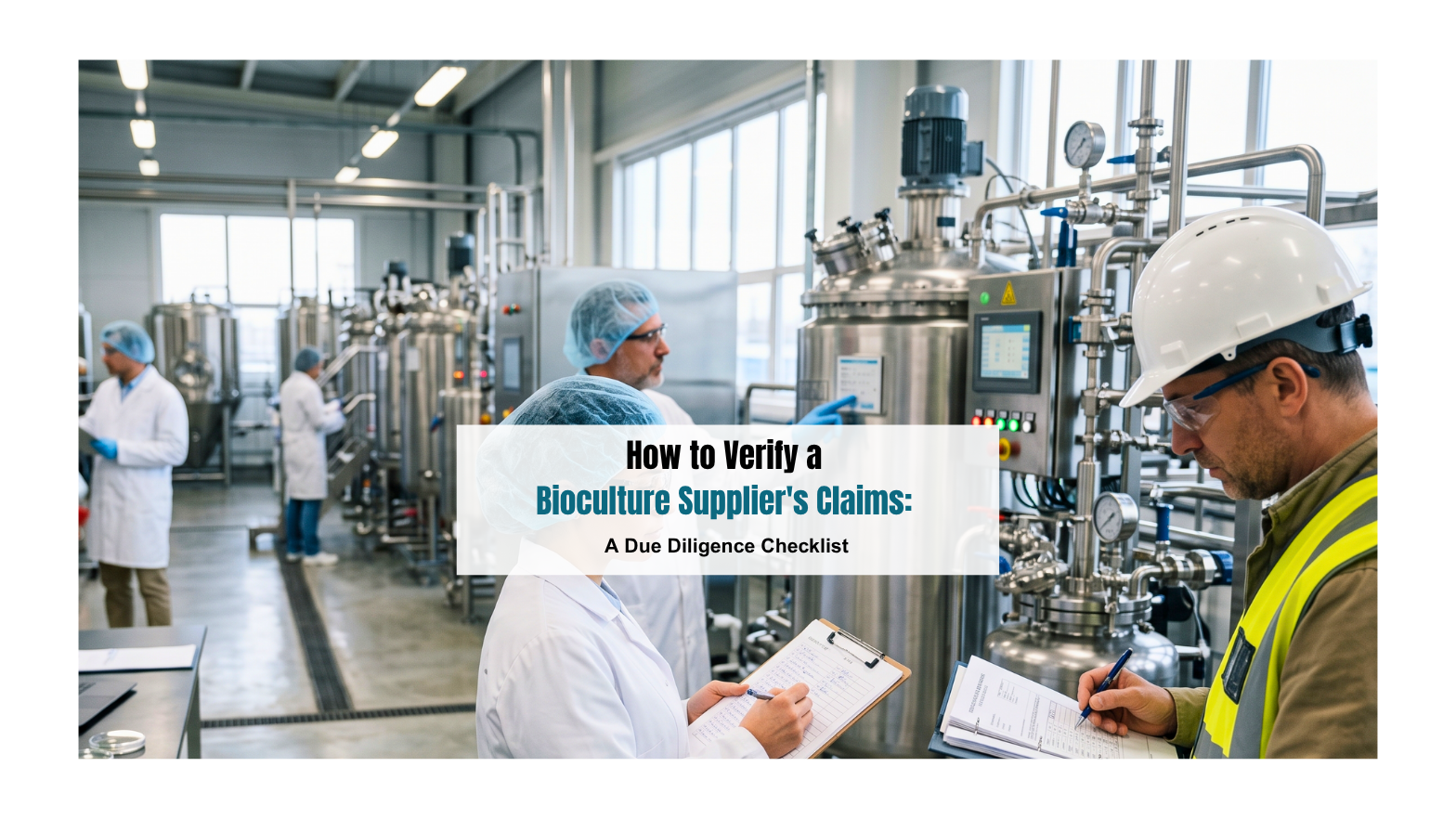

How to Verify a Bioculture Supplier’s Claims: A Due Diligence Checklist
Most procurement decisions for bioculture happen quickly, often under operational pressure. A reactor is struggling, the MLSS is dropping, or a new line has started feeding the ETP, and someone needs a product on site within days. But when a biological system fails, no one asks about the price difference. They ask who approved the vendor.
The sequence is familiar to anyone who has run a treatment plant. The biological reactor underperforms. COD and BOD at the outlet creep upward. The effluent parameters spike during a sampling visit. A few weeks later, a show-cause notice lands on your desk, and you must explain why a plant with a functioning treatment system failed its discharge norms.
Equipment procurement usually gets full scrutiny: technical specifications, factory acceptance tests, performance guarantees, reference visits. Bioculture, which does the actual work of breaking down your pollutant load, rarely gets the same treatment. Yet the consequences of a wrong decision are just as severe. Your credibility, your plant’s compliance record, and your organization’s exposure to CPCB and SPCB enforcement all depend on whether the product in the drum does what the supplier says it does.
This guide gives you a field-tested, step-by-step process to verify a bioculture supplier before you sign a supply agreement. It works whether you manage a single ETP, oversee several STPs, or run wastewater bioculture procurement for a multi-site corporation. Use it as an ETP biological vendor audit framework, adapt it to your sector, and hold every supplier to the same standard.
Why Bioculture Supplier Verification Cannot Be an Afterthought
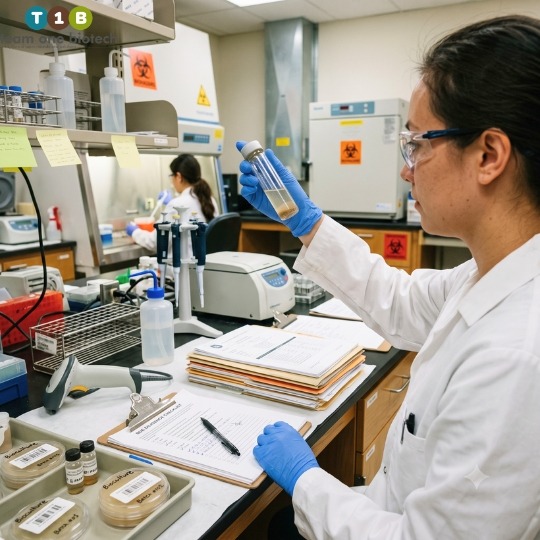
Bioculture failures rarely announce themselves on day one. They unfold as a chain, and each link looks manageable until the last one arrives.
It starts with an unverified or substandard product. The culture may carry far fewer viable organisms than the label claims. It may contain strains that do not suit your wastewater. It may have lost viability in transit or storage. Whatever the cause, the culture fails to establish itself in your reactor. COD and BOD removal falls short of the target. Operators respond by adjusting aeration, increasing dosing, or adding nutrients, which burns time and money while the underlying problem stays unsolved. Eventually the effluent exceeds permitted limits, and the regulator issues a notice.
Detecting this risk at the procurement stage is hard. Suppliers know which documents buyers expect, and many present attractive-looking certificates that nobody has independently validated. A glossy brochure, a list of client logos, and a laboratory report on the supplier’s own letterhead can look convincing in a procurement meeting. None of them proves anything on its own.
The regulatory stakes make this worse. CPCB and SPCB norms leave no room for “the biological system failed” as an excuse during an inspection. The regulator holds the plant responsible for its discharge, regardless of what the vendor promised. Responsibility for the decision stays with you, so the responsibility for verification must too.
A rigorous bioremediation supplier checklist protects you in two ways. It filters out weak suppliers before they reach your plant. It also creates a documented record showing that you exercised due care when you selected a vendor. That record matters in an internal audit and in a regulatory review.
Measure every supplier against a simple standard: if they cannot prove a claim with independent, traceable evidence, treat the claim as unproven. The six steps below turn that standard into practice.
The Due Diligence Checklist: Step by Step
Step 1: Validate Laboratory Documentation (CFU/g Testing)
Start with the document every supplier will hand you first: the Certificate of Analysis (CoA). Then ask the question most buyers skip. Who produced it?
Demand independent testing. Request a CoA from an NABL-accredited laboratory or an equivalent independent lab. A report generated by the supplier’s in-house lab is a starting point, not proof. In-house data has a place in quality control, but it cannot serve as the basis for a purchase decision.
Know what a valid CoA contains. At a minimum, look for:
- Microbial count expressed as CFU/g (for powders) or CFU/mL (for liquids)
- Strain identification, ideally down to genus and species level
- Moisture content
- Stated shelf life and storage conditions
- Batch number, test date, and testing method
Ask when the count was measured. A CoA that reports viable cells at the time of manufacture tells you little about what arrives at your plant. Ask whether the stated count reflects active colony-forming units at the time of dispatch, and what the supplier guarantees through the shelf life. Viability can decline during storage and transit, particularly in hot climates and long supply chains.
Match the count to your application. CFU/g validation is not a matter of finding the highest number. The appropriate range differs between aerobic and anaerobic systems, and between high-COD industrial effluent and low-strength sewage. A product designed for one application can underperform in another, even with an impressive count.
Disclaimer: Values differ based on effluent characteristics, treatment objectives, and plant design. Any ranges quoted are indicative and should be validated against your specific ETP requirements.
Red flag: A supplier who refuses to provide a third-party CoA, or who only presents internal lab data, is asking you to trust rather than verify.
Not sure what CFU/g range suits your ETP application? Contact Team One Biotech’s technical team for a no-obligation assessment.
Step 2: Conduct a Purity and Contamination Screening
A high CFU count means little if the culture contains the wrong organisms. Some products reach impressive counts through non-target or competing species that contribute nothing to treatment. Others carry pathogens that create health and handling risks for your operators. Bioculture purity testing closes this gap.
Request contamination screening reports. These should confirm the absence of harmful coliforms and other pathogens, and show that the product does not carry significant populations of competing, non-functional organisms. Ask for the reports on the same batch as your CoA, not a generic sample from an earlier production run.
Check substrate specificity. Ask whether the culture has been validated against the specific pollutants your plant treats. Phenol, ammonia, heavy metals, and high TDS each stress microbial communities differently. A consortium that performs well on domestic sewage may collapse when it meets a toxic industrial stream. A credible supplier can explain which strains target which compounds and show evidence of that performance.
Understand the testing methods. Reliable purity assessment typically combines several approaches:
- Plating on selective media to isolate and count target organisms
- Microscopic examination to detect unexpected morphologies
- Molecular identification, such as 16S rRNA sequencing for bacteria, to confirm that the strains on the label match the strains in the product
A supplier who relies solely on a basic plate count and cannot discuss molecular confirmation deserves further questioning.
Disclaimer: Contamination thresholds and acceptable purity levels are not universal. They depend on the nature of your wastewater, your reactor design, and your plant’s operating conditions.
Combine this step with Step 1 and you have a stronger form of CFU/g validation: you confirm the quantity of live organisms and also what those organisms are.
Step 3: Assess Fermentation and Production Capability
Many companies sell bioculture. Far fewer make it. Before you commit, find out who actually produces the product you will put into your reactor.
Separate manufacturers from brokers. A broker sources culture from one or more third-party units, repackages it, and sells it under their own label. That model is not inherently dishonest, but it creates distance between you and the people who control quality. When a batch underperforms, a broker often cannot explain why, because they never saw the production process.
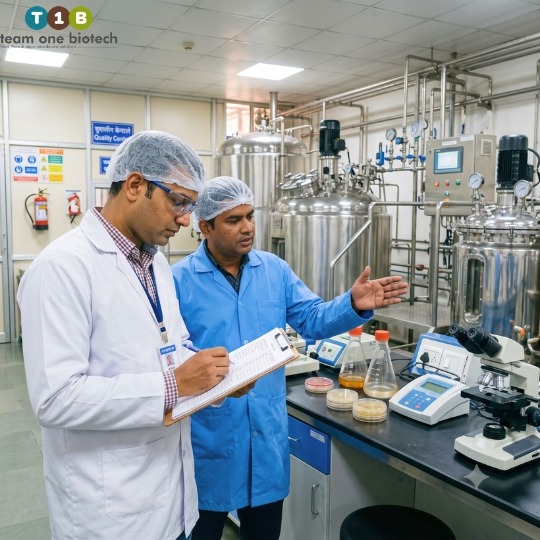
Ask to audit the fermentation facility. A credible manufacturer allows a visit without hesitation. If a supplier delays, deflects, or offers only a virtual tour of a showroom, treat that as information. A proper fermentation capability audit covers the following:
- Controlled fermentation environment. Look for monitoring and control of temperature, pH, and dissolved oxygen, with records that show consistency across runs.
- Batch separation. Production batches should stay physically and procedurally separate to prevent cross-contamination between strains or products.
- Preservation and cold chain capability. Viability must survive drying, packaging, storage, and transit. Ask how the supplier maintains it.
- Batch traceability. Can the supplier link the drum on your dock to a specific production run, with fermentation records, quality tests, and release documentation? If not, you cannot investigate a problem when one occurs.
Test their process knowledge. Ask how they maintain strain integrity, how they prevent genetic drift, and how often they refresh their master cultures. A supplier who cannot answer questions about their own fermentation process is a supplier to avoid.
Team One Biotech operates its own in-house fermentation infrastructure. Ask us for a facility walkthrough before you commit.
Step 4: Verify Case Studies and Field Performance Data
Any supplier can claim successful deployments. The question is whether you can verify those claims.
Ask for structured project references. A useful reference includes:
- The plant name, or an anonymous reference that specifies the industry type
- Influent and effluent parameters before and after dosing
- The dosing protocol used, including quantity, frequency, and method
- The timeline to stable performance
- Any operating constraints, such as variable load or seasonal temperature swings
Speak to a real person. Written testimonials are easy to produce and hard to interrogate. Ask to speak directly with the plant manager or environmental engineer at a reference site. Ask what went well, what needed adjustment, and how the supplier responded when something went wrong. Honest references describe problems as well as successes, and a supplier who connects you with an engineer willing to discuss both has earned some credibility.
Check relevance. A pharmaceutical ETP, a textile ETP, and a food processing ETP face very different demands. Pharmaceutical effluent may carry inhibitory compounds. Textile effluent brings color and high salinity. Food processing wastewater brings high organic load and fats. A strong case study from the wrong sector tells you little about how the product will behave in your plant.
Red flag: Case studies that show only final output numbers, without influent baseline data or dosing methodology, are marketing material, not evidence. A result like “COD reduced significantly” means nothing without knowing where it started, what changed, and how long it took.
Step 5: Check Legal, Regulatory, and Documentation Compliance
Procurement heads and audit teams need paperwork that survives scrutiny. Good documentation on its own does not prove product quality, but missing documentation almost always signals a weak or informal operation.
Confirm business and manufacturing credentials. Verify that the supplier holds the relevant manufacturing licenses and has valid GST registration with the correct HSN code for microbiological products. Check that the registered business activity matches what the supplier claims to do.
Ask about regulatory alignment. Find out whether the supplier’s products have been used in projects aligned with CPCB and SPCB norms. A supplier with experience in this area understands the compliance context your plant operates in. Be careful here, though. A claim of CPCB compliant bioculture does not substitute for independent validation. CPCB and SPCB regulate your discharge, not the product, so a supplier who implies that a regulator has “approved” their culture deserves close questioning about what exactly that means and which document supports it.
Review the safety data sheet. The Material Safety Data Sheet (MSDS) or Safety Data Sheet (SDS) should cover handling, storage, and disposal. It protects your operators, and it shows whether the supplier takes product stewardship seriously.
Require batch-specific documentation for every supply. Each delivery should arrive with its own batch number, CoA, and production date. This requirement is non-negotiable for auditable procurement. Without batch-level records, you cannot trace a performance problem back to its source.
Prepare for internal audit. For corporate procurement heads, ensure vendor documentation is complete and audit-ready before you add the supplier to your approved vendor list. Fixing documentation gaps after onboarding is far harder than demanding complete records at the start.
Step 6: Run a Controlled Pilot Trial Before Full-Scale Procurement
No amount of documentation replaces performance under your actual operating conditions. Laboratory data tells you what the product contains. A pilot trial tells you what the product does in your wastewater.
Insist on a trial. Run either a bench-scale test or a small reactor trial before you commit to full procurement. A supplier confident in their product will welcome this. A supplier who resists a trial, or pushes you to skip it for the sake of speed, is shifting risk onto you.
Define acceptance criteria in advance. Agree on what success looks like before you start, and write it down. Typical criteria include:
- Target COD and BOD reduction, expressed as a range
- Settling characteristics
- Sludge volume index behavior
- Timeline to reach stable performance
Setting criteria beforehand prevents arguments afterward and stops either party from moving the goalposts once results arrive.
Document the trial rigorously. Record influent and effluent data, dosing quantities and timing, and operational conditions such as temperature, pH, DO, and flow. Note any disturbances, such as a shock load or a pump failure, because they affect how you interpret results. A well-documented trial gives you both a decision basis and an audit trail.
Disclaimer: Performance benchmarks for pilot trials are highly plant-specific. What counts as acceptable performance in one ETP may be insufficient in another, depending on load variability, temperature, pH ranges, and hydraulic retention time. Consult a qualified environmental engineer to define your site-specific acceptance criteria.
Team One Biotech offers structured pilot trial support for new clients. Reach out to our application team to define a trial protocol that fits your plant’s parameters.
The Warning Signs: When to Walk Away
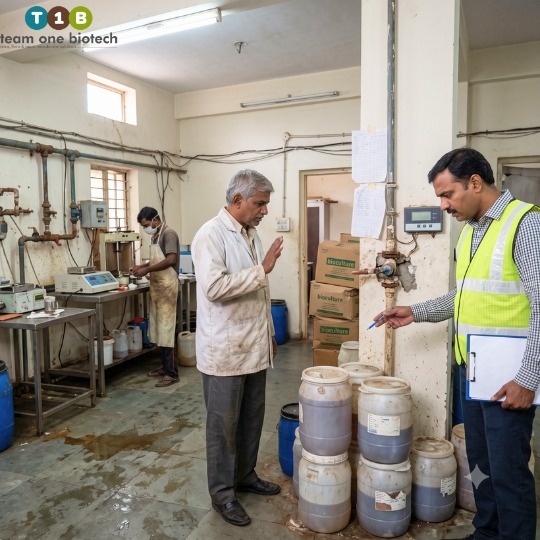
Even a careful checklist can feel slow when pressure builds. Keep this quick-reference list handy. Any one of these should make you pause. Several together should end the conversation.
- No third-party CoA available. If the supplier can only offer internal data, you have no independent evidence of what the product contains.
- Refusal to allow a facility audit. A manufacturer proud of its process opens the door. Reluctance usually means there is little to see.
- Vague or unverifiable case study claims. Results without baselines, methods, or reachable references prove nothing.
- No batch traceability or documentation system. Without traceability, you cannot investigate a failure or defend a procurement decision.
- Extremely low pricing without explanation. Cost reflects fermentation quality, testing, packaging, and support. If a price sits far below the market, ask what the supplier has cut.
- No technical support or post-supply troubleshooting. Bioculture performance depends on application. A supplier who disappears after delivery leaves you alone when the reactor needs adjustment.
The cheapest bioculture is almost always the most expensive mistake. The saving on the purchase order disappears the first time you pay for re-seeding, extended aeration, additional testing, or a regulatory penalty. The cost of that failure falls on the plant, not the supplier.
What Separates a Genuine Bioculture Manufacturer from a Reseller
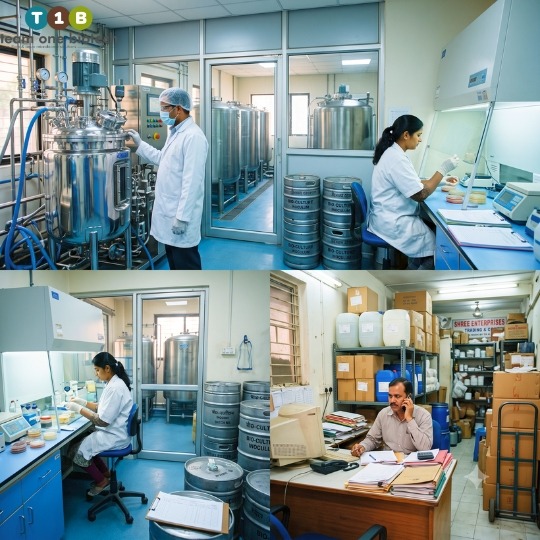
The market contains many suppliers who function as traders. They source from fermentation units they have never audited, relabel the product, and sell it with confidence they cannot back up. A genuine manufacturer behaves differently. A manufacturer owns or controls the fermentation process, traces every batch, and has the technical expertise to design culture consortia for specific wastewater profiles rather than selling one generic product for every application.
You can separate the two with a short set of questions. Treat this as a checklist within the checklist.
Ask about ownership and control.
- Where is the product fermented, and who owns that facility?
- Can you visit it, and when?
- Who runs quality control, and what are their qualifications?
Ask about batch records.
- Can you show me the fermentation record for a recent batch?
- How do you assign batch numbers, and how long do you retain records?
- What happens if a batch fails your internal release criteria?
Ask about customization.
- How do you select strains for a specific effluent?
- Have you adjusted a consortium based on feedback from a client’s plant?
- Can your technical team review my influent data before you recommend a product?
Ask about accountability.
- When a product underperforms, who investigates?
- Do you provide on-site or remote technical support after delivery?
- What do you do when results fall short of the trial criteria?
A manufacturer answers these questions with specifics, and often with documents. A middleman answers with generalities, or redirects you to “the principal” or “our partner unit.” That pattern tells you whom you are really dealing with, and who will be accountable when something goes wrong.
Frequently Asked Questions
What documents should I request before finalizing a bioculture supplier?
Request an independent Certificate of Analysis from an NABL-accredited or equivalent lab, contamination screening reports, batch-specific documentation, the SDS, and proof of manufacturing licenses and GST registration. Add structured project references with influent and effluent data, and ask for permission to audit the production facility. Together, these documents give you evidence on quality, safety, traceability, and legitimacy.
How do I know if a CFU/g count is reliable?
Check four things. First, confirm that an independent laboratory produced the figure, not the supplier’s in-house team. Second, confirm that the count reflects viable organisms at the time of dispatch, not just at manufacture. Third, confirm that the strains are identified and match the product’s stated composition. Fourth, confirm that the count is relevant to your application. A large number means little without these checks. Treat CFU/g validation as a combination of quantity, identity, and suitability.
Can I use the same bioculture supplier for different types of ETPs?
Sometimes, but not automatically. A capable manufacturer can supply different consortia for different effluent profiles, such as textile, pharmaceutical, or food processing wastewater. Be cautious about a supplier who offers a single product for every application. The pollutants, salinity, temperature range, and loading patterns differ across sectors, and so do the organisms best suited to treat them. Run a separate pilot trial for each distinct application.
What is the role of CPCB compliance in bioculture procurement?
CPCB and SPCB norms set the discharge limits your plant must meet. They do not certify bioculture products, so no supplier can honestly claim that a regulator has approved their culture. What compliance does influence is your selection criteria: you need a product and a supplier that help you consistently meet your consent conditions, with documentation that supports your case during an inspection. A supplier familiar with CPCB-aligned projects understands that context, but you still need independent validation of their claims.
How long does a proper bioculture supplier audit take?
The timeline depends on the scope. A documentation review can take days. A facility audit usually requires a site visit and one or two working days. A pilot trial takes longer, often several weeks, because the culture needs time to establish and stabilize in your system. These durations vary with plant size, effluent complexity, and how quickly the supplier responds. Plan the full process before your procurement deadline, not after.
Disclaimer: These values are indicative and general. Actual parameters vary based on your plant’s influent characteristics, design, and operating conditions.
Your Biological System Deserves Better Than a Gamble
Return to the moment this guide opened with: the reactor that underperforms, the effluent that fails, the notice that arrives. In almost every case, the warning signs were present at the procurement stage. The supplier avoided the audit. The CoA came from an internal lab. The case studies lacked baselines. Nobody ran a trial because the plant needed the product quickly.
Due diligence on bioculture suppliers is not bureaucratic box-ticking. It is operational risk management. The six steps in this guide give you a way to verify supplier claims: validate the lab data, screen for purity, audit the fermentation process, check field performance, confirm legal and documentation compliance, and test the product in your own plant. Every step produces evidence you can show to your management, your auditors, and, if it ever comes to that, your regulator.
Apply this process to every new supplier, and repeat it periodically for existing ones. A vendor who passed an audit three years ago may have changed their sourcing, their process, or their quality controls since then.
If you are currently evaluating bioculture suppliers, or you are unsure whether your existing vendor’s claims hold up to scrutiny, connect with Team One Biotech’s technical team. We don’t just supply. We validate, support, and stand behind every batch we deliver.
Looking to improve your ETP/STP efficiency with the right bioculture?
Talk to our experts at Team One Biotech for customised microbial solutions.
Contact: +91 8855050575
Email: sales@teamonebiotech.com
Visit: www.teamonebiotech.com
Discover More on YouTube – Watch our latest insights & innovations!-
Connect with Us on LinkedIn – Stay updated with expert content & trends!